
AMDNew Model SoonNew Model Expected Soon — Wait if you can
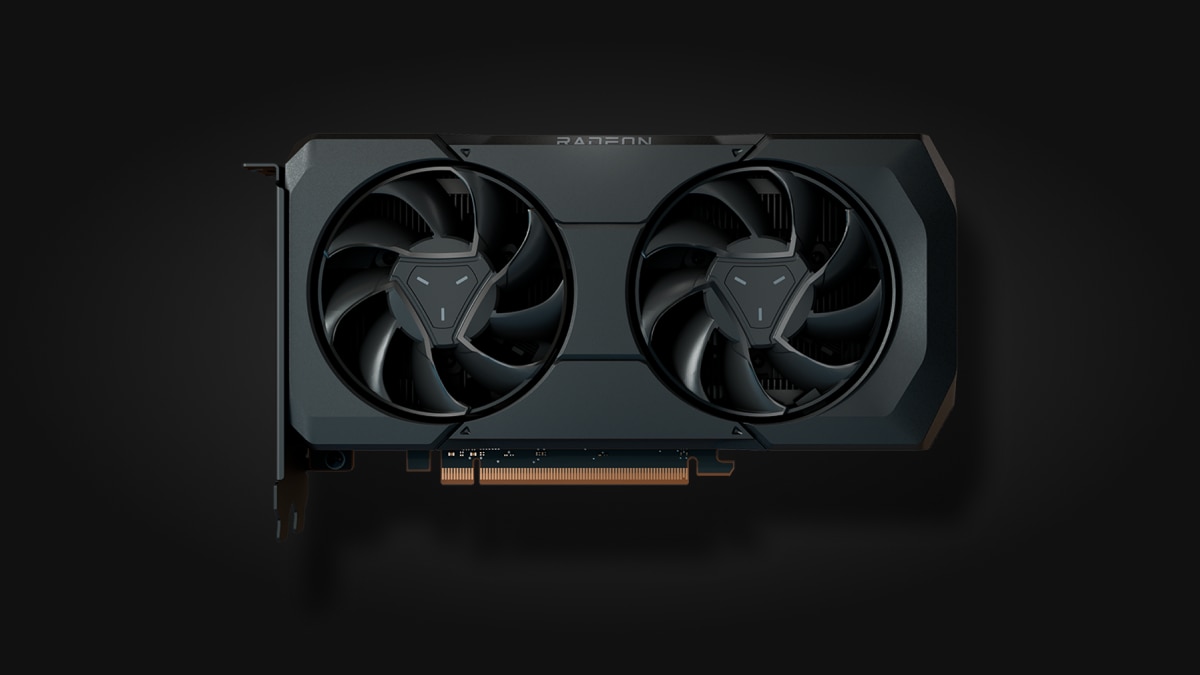
Radeon RX 7600 XT
Affiliate Disclosure: We may earn a commission when you buy through links on our site. This does not influence our editorial recommendations. Learn more about how we make money
Clara’s Verdict
Very GoodA practical mid-range GPU that handles everyday gaming smoothly without breaking the bank.
Best for: 1080p gamers, budget builders, office PCs needing light gaming
Skip if: 4K enthusiasts, high-refresh competitive gamers, creators doing heavy rendering
Ethan’s Verdict
Very GoodSolid 1080p and light 1440p performer that undercuts competitors, but don't expect miracles at higher settings.
Best for: 1080p gaming at high settings, Budget builders under $350, Upgrading from integrated graphics
Skip if: 4K gaming aspirations, High-refresh 1440p competitive gaming, Future-proofing your system
Clara’s Pros & Cons
- +Great 1080p performance at reasonable price
- +Runs cool and quiet in daily use
- +Easy installation, minimal fuss setup
- +Low power draw saves on electricity
- −Struggles with demanding 4K gaming
- −Not ideal for professional rendering work
- −Older architecture compared to newer cards
Ethan’s Pros & Cons
- +Sub-$300 pricing is genuinely competitive
- +Low power draw simplifies system requirements
- +Handles 1080p gaming confidently
- +Good driver support and stability
- −FSR is weaker alternative to DLSS
- −Ray tracing performance is underwhelming
- −Limited future-proofing at 8GB VRAM
- −1440p demands compromise settings
Score Breakdown
Performance7.015% wt
Thermals & Noise8.010% wt
Build Quality7.015% wt
Compatibility8.010% wt
Features7.010% wt
Ease of Install8.020% wt
Value8.020% wt
Score Breakdown
Performance7.030% wt
Thermals & Noise7.015% wt
Build Quality6.010% wt
Compatibility8.015% wt
Features6.010% wt
Ease of Install8.05% wt
Value8.015% wt
Clara’s Full Review
A Practical Card for Real-World Gaming
Let's be honest: not everyone needs a $700 graphics card. If you're building a PC for actual living room gaming, browsing, and maybe some 1080p gaming at respectable frame rates, the RX 7600 XT makes a lot of sense.
The performance is straightforward. You're looking at 60+ fps in most games at 1080p with high settings. That's the real-world sweet spot for casual and mid-core gamers. If you're into competitive shooters like Valorant or older titles, you'll easily hit 100+ fps. Demanding new releases like Cyberpunk 2077 or Avatar Frontiers of Pandora? You'll need FSR upscaling or lower settings, but it's still playable.
What I appreciate most is the practicality. The 180W power draw means you're not upgrading your entire power supply. The cooler is compact, so it fits in normal cases without requiring a massive tower. It runs cool enough that you won't hear it screaming during gaming sessions, which matters if your PC is in a shared living space.
The 8GB of VRAM is adequate for 1080p gaming right now. You won't be maxing out every setting in every new game, but that's fine. The card includes ray tracing and FSR upscaling, so you have options to either improve visuals or boost performance depending on what you're playing.
Driver support from AMD is solid for regular gamers. It's not as aggressive with updates as some competitors, but for everyday use, it's reliable and doesn't require constant tweaking.
The main limitation is obvious: this isn't a 4K card, and it's not for professional work. If you're doing 3D rendering, video editing, or machine learning, look elsewhere. But if you want a no-nonsense GPU that plays games well at 1080p without drama or excessive cost, this delivers. It's the kind of card that just works, which honestly is what most people actually need.
Ethan’s Full Review
The Honest Take on AMD's Budget Play
AMD's positioned the RX 7600 XT as a no-nonsense entry point, and that's exactly what you're getting. At $299.99, it's not trying to be a flagship or even a midrange card. It's a 1080p specialist with a realistic power envelope and a price that doesn't require financing.
Let's be direct about performance expectations. The 2560 stream processors and RDNA 3 architecture deliver solid 1080p gaming at high settings. You'll see 60+ fps in most modern titles, which is the baseline for enjoyable gaming. Push to 1440p and you're negotiating with settings. Medium presets work fine, but ultra is off the menu. 4K is fantasy.
The architecture itself is competent. RDNA 3 brought efficiency improvements, and that 180W power draw reflects it. This card doesn't need a beefy PSU or elaborate cooling. Most implementations stay quiet under load, which matters more than reviewers admit when you're buying a budget card. You're not paying for silence, but you're not getting a jet engine either.
Here's where AMD fumbles slightly. FSR support is there, but FSR 2.0 still trails DLSS 3 in visual quality and performance gains. If DLSS matters to your game library, Nvidia's RTX 4060 becomes more tempting despite higher cost. Ray tracing is technically present but not worth enabling unless you're desperate for the visual checkbox. The card simply isn't fast enough to make ray tracing practical.
8GB of GDDR6 is adequate for this performance tier but not generous. Modern AAA titles are creeping toward 10-12GB requirements, so you're not future-proofing anything here. This is a 2-3 year card, not a 5-year investment.
Build quality is honest. You're not getting premium capacitors or exceptional power delivery, but it's not cheap garbage either. It's functional, stable, and won't embarrass you. The card knows what it is.
Compatibility is straightforward. PCIe 4.0, standard power delivery, and no exotic requirements mean this works in almost any modern system. Driver support is solid across Windows and Linux, with AMD's commitment to open-source drivers being a real advantage for long-term stability.
The value proposition is the real story. For $299.99, you're getting legitimate 1080p gaming without compromise. Nvidia's RTX 4060 costs $299 for marginally better performance but with DLSS advantage. The 4060 Ti jumps to $500. For the sub-$300 segment, AMD's playing the value game well.
This isn't a card to get excited about. It's a card to buy if you need 1080p gaming without drama, and your budget won't stretch further. It's honest, competent, and reasonably priced. That's enough.
Specifications
| DLSS | FidelityFX Super Resolution |
| Memory | 8GB GDDR6 |
| GPU Architecture | RDNA 3 |
| Power Consumption | 180W |
| Ray Tracing Cores | Yes |
| Stream Processors | 2560 |
Overall Rating
Related Reviews
NVIDIA RTX 4070 Super vs Intel Arc B580: Which GPU Wins in 2025?
NVIDIA's $599 RTX 4070 Super battles Intel's $249 Arc B580. We analyze performance, value, and real-world gaming to declare a definitive winner.
RTX 5090 vs 5080 vs 5070 Ti: Which NVIDIA GPU Should You Buy?
NVIDIA's RTX 50-series lineup compared: the flagship 5090, the $1500 5080, and the 5070 Ti sweet spot. We analyze performance, value, and who should buy what.
Best Graphics Cards 2026: Top Picks Reviewed
AllReviews ranks the best graphics cards using combined critic and editorial scores. Top picks include ASUS GeForce RTX 5080 PRIME, ASUS GeForce RTX 5070 PRIME, AMD Radeon RX 7600.
Alternatives Worth Considering
Review History
Initial review from real source data
Initial review from real source data
Editorial Independence
Our reviews are based on research from trusted expert sources. We may earn commissions from affiliate links, but this never influences our ratings or recommendations. How we score · Editorial policy · Report an error
Related Graphics Cards

Lowest Price Vendor Auto-Selected
Lowest Price Vendor Auto-Selected